















Buying a washer for your home is not a straightforward as you may think. Sure, most washing machines will do the job of removing stains and smells from your clothes to begin the laundry process. However, there are plenty of other considerations such as loading configurations, installation options, energy-saving features, and so much more that can make your next washer the best decision you’ve ever made – if you know what to look for.
At Appliance Palace, we want you to be certain that the appliance you choose will live up to your expectations before you buy it. So we’ve picked our experts’ brains to learn everything our customers should know about washing machines before browsing our vast inventory of high-quality appliances. That way, you’ll be able to quickly and efficiently narrow down your search to the features and functions you need – or didn’t know that you needed.
Before You Buy
The last thing you want on delivery day is to find out you can’t use your new washing machine. Let’s go through some basic housekeeping tips to determine which models are compatible with both your preferences and your installation space.
- It is strongly advised that your washer be removed and/or replaced by a professional appliance installer.
- If you are removing an old washer yourself or having it hauled away, make sure to empty and unplug it. Also ensure trim, flooring, or other obstructions to the washer’s legs are removed before doing so.
- Existing parts cannot be used for a new washer hookup, so make sure to order a dedicated washer connection kit compatible with your unit (sold separately).
- If you are installing your laundry unit in a closet, allow at least 6” of clearance behind it for hookups and plumbing. Also ensure the washer door will have enough clearance to fully open.
- Make sure your washer will have enough vertical clearance if will be mounted on a laundry pedestal accessory (sold separately).
- Most washers require a three-prong, 110V outlet within 5 ft. of your new washer unit. Check your available hookups to confirm installation will be possible when your unit arrives.
- Corrosion-free hot and cold water shut-off valves must be within 4 ft. of your appliance, with standard metal connections that do not require modification to work with the parts of your new unit.
- If you are stacking a dryer on top of your washer, you must also buy a compatible stacking kit that matches both units (sold separately).
- Please note, when bought as a side-by-side, front-loading set, your washer will almost always be on the left and your dryer on the right. This is because front loading washing machines typically have a left hinge (opening from the right) and dryers have a right hinge (opening from the left). Select brands offer these units with reversible doors that can have their hinge side switched by a qualified technician.
Configuration Types
Configuration refers to the installation style of your washer when paired with a matching dryer. When deciding on a configuration, it is important to first consider the amount of installation space you are working with and how you prefer to physically load and unload the washer. Let’s go through the basics of each to narrow down your selection.
Side-by-Side Washers and Dryers
Since washers and dryers are freestanding units, they can go anywhere in your home with the right utility hookups. This includes closets, basements, and dedicated laundry rooms. As such, most pairings can be placed beside one another. Washers that are placed side-by-side can be either top loading or front loading. The differences between these loading designs will be covered in the next section.
Stackable Washers and Dryers
Select washers and dryer pairings from the same brand can be stacked on top of one another with a compatible stacking kit (sold separately). Not only does this allow your laundry pair to take up half the footprint in your home to fit narrow spaces, but it is also extremely convenient for people with back issues. Since the dryer is on top of the washer, no additional bending is required to remove and fold your clean clothing after both washing and drying cycles are done.
Front Load Washers vs. Top Load Washers
Washing machines can load from either the top or the front depending on the model you choose. Both styles utilize different wash methods and drum designs that are most effective for different types of loads. Let’s go through the difference in both to determine which is better suited for your laundry needs.
Top Load Washers
Top load washing machines require little to no bending to load since you can access clothes from the top of the unit, as their name suggests. They fill the tub with holes from the bottom, causing water to rise. Likewise, they drain from the bottom after a cycle is done, minimizing the likelihood of mold formation compared to front load units. It is recommended you do not fill the drum to capacity since water cannot penetrate clothes all the way to the top and their built-in washing tools – agitators and impellers – need movement space to be effective.
- Agitator Washers: Agitators are cylindrical spinning tools with fins that come up through the center of the washer drum and oscillate back and forth. The fins grab and drag clothes at different heights for mechanical scrubbing. This wash style is ideal for heavy duty fabrics and materials normally found in work clothes and sportswear.
- Impeller Washers: Impellers are rotating disks at the bottom of a washer drum that gently swirl loads and create a “mini-waterfall” that mechanically scrubs fabrics against one another. This is ideal for delicate materials like silk that might be damaged by an agitator. Without an agitator, they also have slightly higher capacities.
Front Load Washers
Front load washers tumble clothes on a horizontal axis to thoroughly saturate them with water and detergent. Without the need for an agitator, front load washers can have roughly 1.0-1.2 cu. ft. of extra drum space compared to top load models. Additionally, the natural tumbling motion is gentler on clothes, allowing you to get the deep cleaning power of an agitator without the risk of tearing delicate materials.
Accessories and Alternate Washer Types
While standard washers have roughly the same sizes and body designs, there are several accessories and unique washer styles that can upgrade your laundry experience.
Laundry Pedestals
Pedestals elevate washers and dryers on average one additional foot above the ground. This makes their drums more accessible by reducing bending. Most pedestals double as a storage compartment. Use them to store clean clothes, detergents, and other laundry supplies!
Laundry Centers
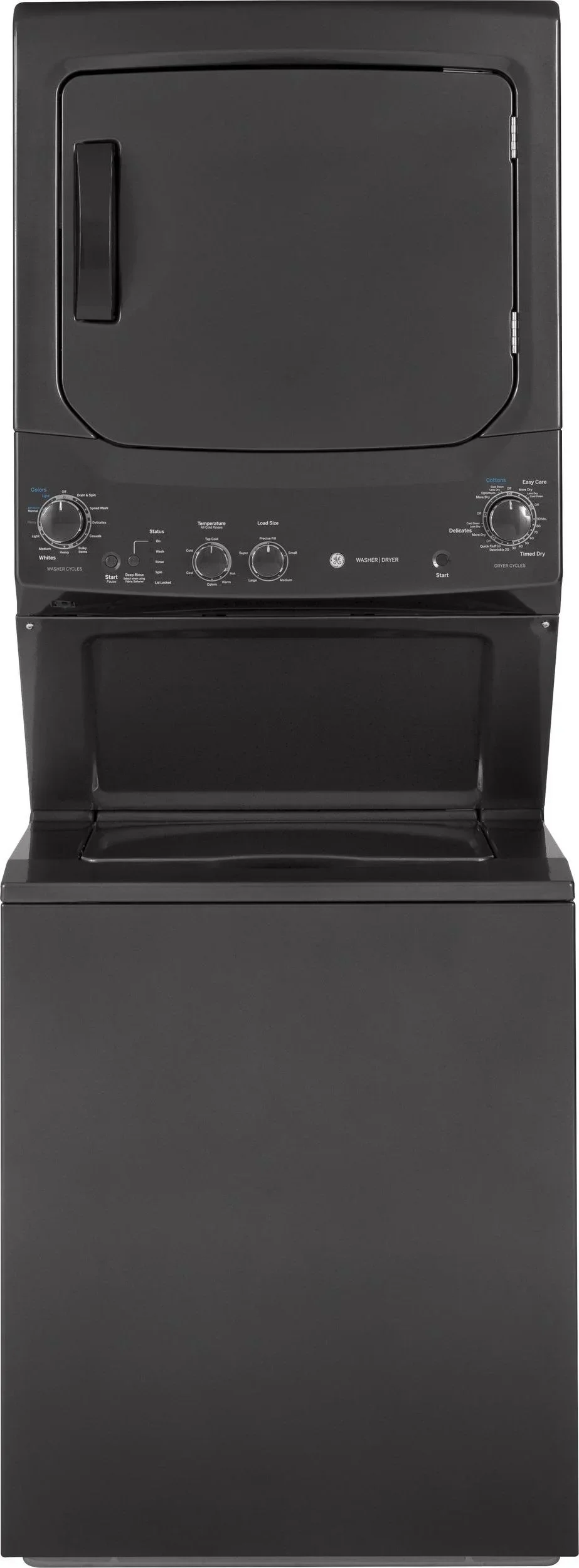
Laundry centers are slimline washer and dryer combinations with separate, compact drums connected by an included bracket. Many laundry centers include a top load washer design – impossible for stacked washer and dryer pairs connected by a kit. The main tradeoff is that the connector bracket cannot be removed. Their connection is a permanent part of the design.
Washtowers
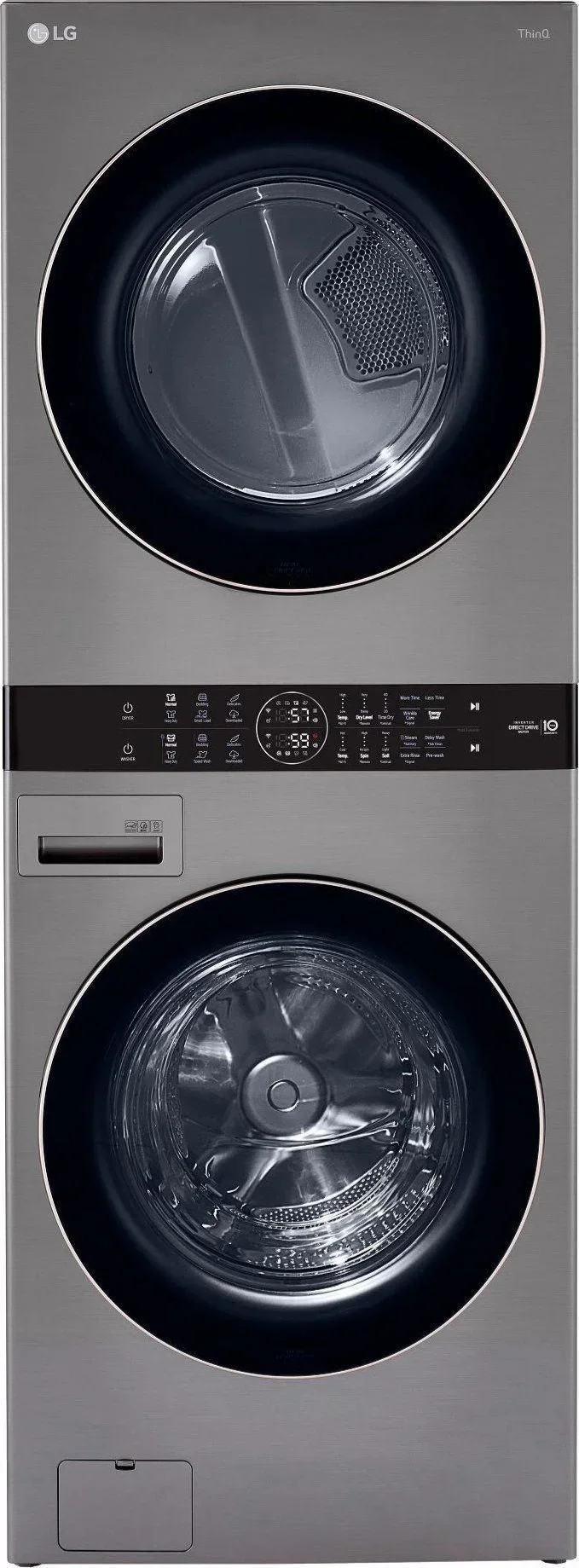
Washtowers are essentially luxury-grade laundry centers. Their central control panels give the appearance of a sleek, stacked laundry pair that maximizes convenience as you switch between settings.
Washer/Dryer Combos
Washer/dryer combos are an all-in-one laundry suites that utilize the same drum for both washing and drying! The main benefit of this design is that you never need to swap items between cycles – as soon as washing is complete, the drying cycle can begin immediately. However, this also means you cannot run washing and drying cycles simultaneously as you could with a separate laundry pair.
Premium Features and Design Elements
Modern washers have numerous features and design elements to help you tailor cleaning to your personal needs:
- Steam functions gently lift stains and soil from fibers to more easily flush them away without intensely scrubbing clothes.
- Cold water cycles save you money by achieving warm water performance with enhanced washing motions.
- Automatic detergent dispensers release the appropriate amount of cleaner for your load size and do not need to be refilled for several cycles.
- NSF-certified sanitization cycles reach high enough temperatures to remove 99.99% of microbes, ensuring your clothes don’t just look clean – they are clean.
- Honeycomb drum designs allow for more efficient airflow while preventing clothes from snagging.
- Digital display panels update you on the progress of your drying cycle, showing remaining times and error alerts.
- AI-powered technology can determine the right cycle settings and lengths based on your load, taking the guesswork out of washing.
- Friction-reducing hardware can reduce noise in your home while delaying wear and tear on your appliance that can shorten its lifespan.
- Smart Features and Wi-Fi Connectivity add hands-free functionality to your washer, letting you operate it by means of a smartphone app or even your voice.
Smart Washers and Wi-Fi Features
Whether it’s your phone to your Bluetooth speaker, your computer to your TV, and now even with appliances, the era of “smart” and “connected” devices is going strong. However, most people are not sure of the difference between smart appliances and connected appliances.
Smart Washers
“Smart” refers to intuitive operations initiated by the washer unit when certain sensors are triggered. An example of this is Bosch’s AquaStop® Plus feature which detects leaks within the water inlet. When a leak is detected, the washer automatically closes the inlet and activates the drain pump to empty the machine.
Connected Washers
“Connected” refers to Wi-Fi compatibility. Connected washers can access the internet to download updates, send notifications to your smartphone, allow the manufacturer to perform remote diagnostics, let you operate the washing machine with your voice using a smart home manager, and so much more. One of the most impressive modern examples of this is Miele washers that can sync with the Miele@Home mobile app. Using Miele@Home, you can monitor and adjust wash cycle settings remotely from your phone, allowing you to attend to other chores around the house and be notified when a cycle is done.